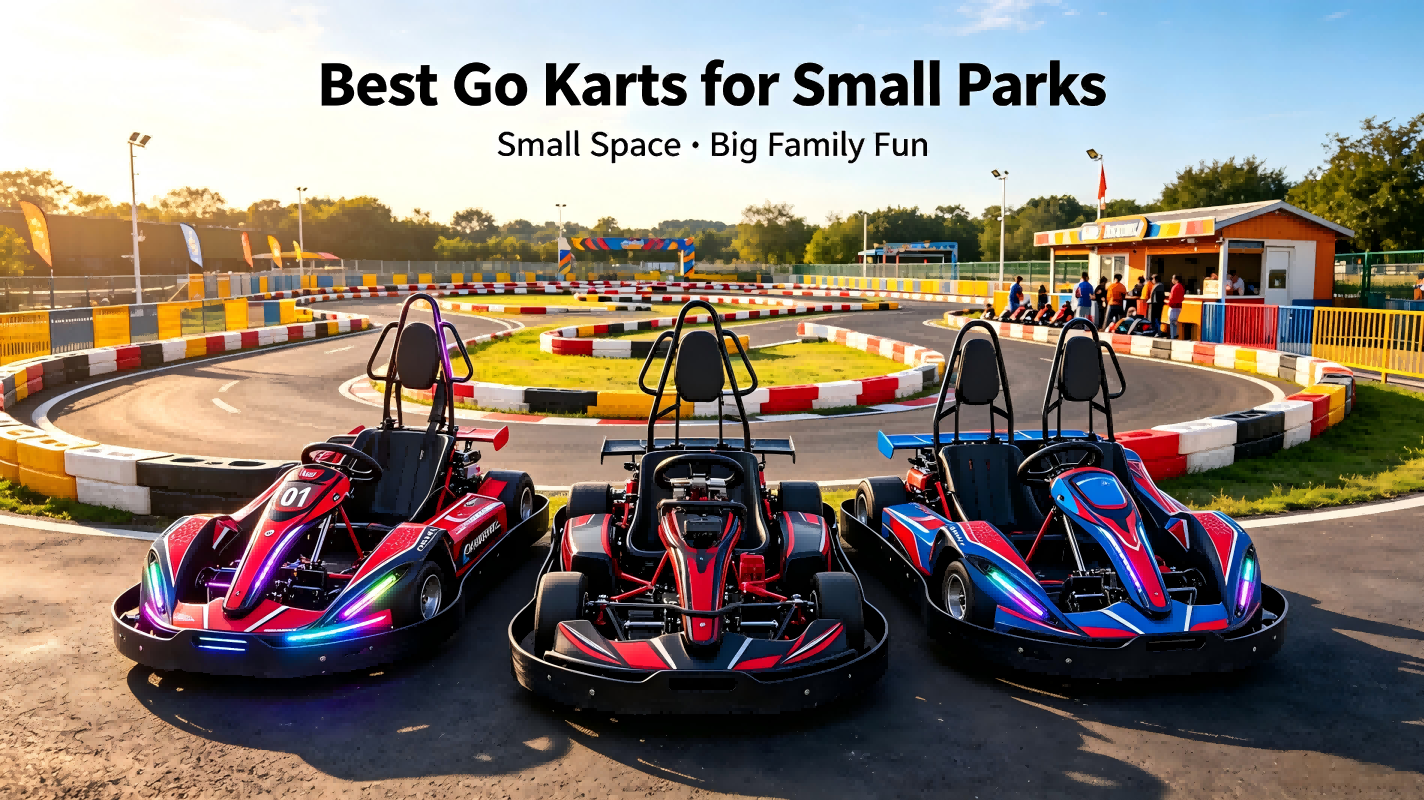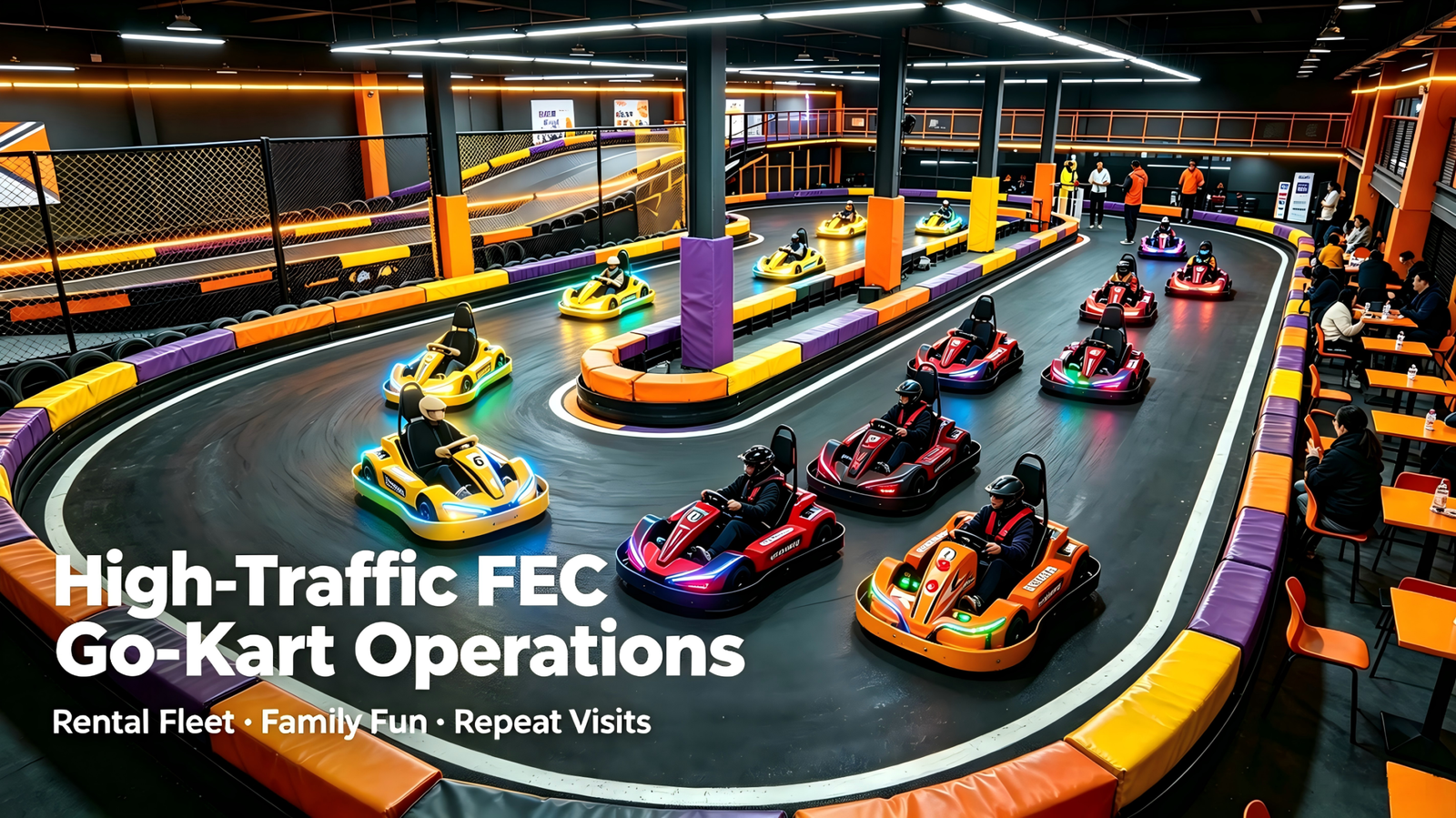
Go-karts consistently rank among the highest-revenue attractions for family entertainment centers and small amusement parks. They offer high throughput, strong repeat visitor rates, and exceptional return on investment (ROI).
Why Go-Karts Are a Good Attraction for Small Amusement Parks
Adding a go-kart track transforms a casual visit into an extended stay, boosting both overall ticket sales and food/beverage concessions.
- Broad Demographic Appeal: Families, teenagers, groups, and corporate outings all participate.
- High Throughput: Continuous heat cycles mean maximum passenger flow during peak operating hours.
- Anchor Attraction: Go-karts serve as a major visual and experiential driver that gets guests through the park gates.
How Much Does a Commercial Go-Kart Cost?
Commercial go-karts generally range from $3,000 to $12,000+ per unit, depending on power source, capacity, and advanced features (such as remote kill switches and differential steering).
Unlike recreational yard karts, commercial models are engineered for 8 to 12 hours of continuous daily abuse, featuring reinforced steel chassis, full-wrap polyethylene bumpers, and industrial-grade engines or heavy-duty electric motors.
What Makes a Go-Kart Profitable?
Maximizing your track’s profitability requires balancing revenue drivers against variable operating expenses.
- Initial Equipment Cost: Offsetting durable kart purchase price with low long-term downtime.
- Track Capacity: The total number of karts running simultaneously determines peak hourly earning potential.
- Ride Duration: Most commercial heats run 5 to 8 minutes, striking the ideal balance between guest value and fast turnover.
- Daily Operating Hours: Maximizing peak operating hours directly accelerates capital paydown.
- Maintenance: Modular design and readily available replacement parts prevent costly track idle time.
- Electricity/Fuel: Utility costs vary significantly between charging infrastructure and gasoline consumption.
- Ticket Pricing: Strategic pricing models (e.g., $10–$18 per single ride heat, combo passes, or multi-ride packages).
- Repeat Customers: High replay value ensures guests ride multiple heats per visit.
Best Types of Go-Karts for Small Amusement Parks
Selecting the right fleet mix ensures you cater to every demographic entering your park.
Single Seater Go Kart
The standard baseline for commercial tracks. Designed for solo riders meeting height requirements, these units deliver precise handling, responsive braking, and high driver engagement.
Double Seater Go Kart
Crucial for driving revenue from families with small children. A double-seated kart allows parents or older siblings to drive toddlers and younger kids who cannot operate a kart independently.
Electric Go Kart
The modern industry standard for low noise, zero emissions, instant torque, and programmable speed profiling. Electric units allow operators to remotely adjust top speeds for different age groups or safety conditions.
Gas Go Kart
A traditional choice featuring lower initial upfront hardware costs and rapid refueling. Best suited for continuous high-temp outdoor operations where electrical grid supply is limited.
Kids Go Kart
Scaled-down chassis with targeted speed caps (typically under 10–12 mph). Perfect for dedicated, low-risk junior tracks that serve the 4-to-8 age bracket.
Electric vs Gas Go-Karts for Small Parks
Choosing between electric and gas power depends on your facility layout, local utility rates, and operational preferences.
Read our full in-depth comparison guide here:
Electric Go-Karts vs Gas Go-Karts for Commercial Use
How to Choose a Commercial Go-Kart Supplier
Selecting a manufacturer goes beyond the purchase price—you need a long-term partner who provides direct technical support, safety certifications, and reliable spare parts availability.
Learn what questions to ask vendors in our complete breakdown:
How to Choose a Reliable Commercial Go Kart Manufacturer
How to Calculate Your Go-Kart ROI
To determine how quickly your fleet investment will pay for itself, use this standard return-on-investment formula:

Example Calculation:
- Initial Investment: $120,000 (15 Electric Karts + Charging Stations)
- Annual Gross Revenue: $220,000 (Based on average daily heat bookings)
- Annual Operating Costs: $60,000 (Electricity, routine maintenance, labor, insurance)
- Net Annual Profit: $160,000

Under standard operational conditions, a well-managed commercial track typically achieves full capital payback within 12 to 18 months.
How Many Go-Karts Does a Small Amusement Park Need?
Matching your fleet size to your track length and peak daily attendance prevents bottlenecks while keeping operational overhead lean.
| Fleet Size | Target Track Length | Recommended Application |
| 10–15 Karts | 150 – 250 Meters | Small family entertainment centers, seasonal tracks, low-footprint setups |
| 20–30 Karts | 300 – 500 Meters | Standard small-to-midsize amusement parks with steady weekend crowds |
| 30+ Karts | 500+ Meters | High-throughput regional parks or dedicated multi-track attractions |
Get Commercial Go-Karts from a Direct Manufacturer
Navigating middlemen and trading distributors inflates equipment costs and delays technical support when you need spare parts fast. Working directly with an experienced commercial manufacturer ensures top-tier quality control, factory-direct pricing, and ongoing support.
At MaxKartBoat, we manufacture commercial electric and gas go-karts engineered specifically for amusement parks, FECs, and commercial raceways. From custom chassis configurations to fleet safety management systems, we provide complete factory-direct solutions tailored to your operational requirements.
Contact the MaxKartBoat team today to request catalog pricing and a custom ROI plan for your park layout.